Watermelon fasting
Usually describes a period of eating watermelon or drinking its juice while leaving out other foods. Because watermelon provides calories, this is different from a water-only fast.
FRESH FRUIT. OPEN CURIOSITY.
A closer look at the practice, the personal stories, and the science. Plus simple ways to enjoy every juicy bite.
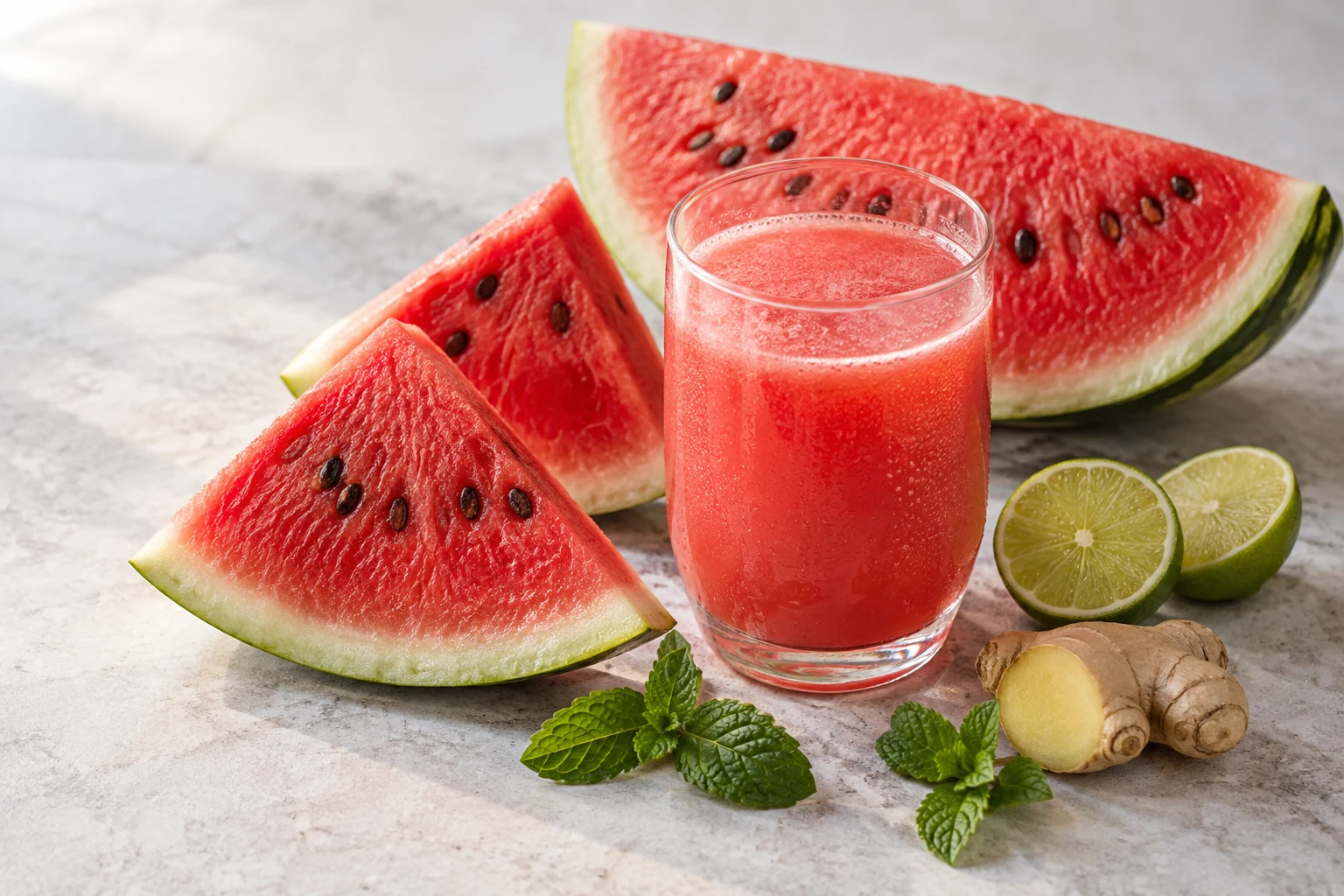
Watermelon is a food worth enjoying. Eating only watermelon for days or weeks is restrictive, and it has not been established as a treatment for disease. This is an educational guide, not a fasting prescription. [1] [2]
01 / UNDERSTAND THE PRACTICE
“Fasting,” “feasting,” and “cleansing” are often used loosely in online conversations. What someone actually eats matters more than the label.
Usually describes a period of eating watermelon or drinking its juice while leaving out other foods. Because watermelon provides calories, this is different from a water-only fast.
Emphasizes eating and enjoying the fruit. Some people use it for the same watermelon-only practice; others include citrus, ginger, or herbs. There is no single standardized protocol.
In fruit-focused and raw-food communities, personal accounts keep the conversation going. Gillian Berry’s interviews are one place to hear those experiences firsthand. Explore the stories ↗
02 / IN THE KITCHEN
Five simple preparations using watermelon, lemon or lime, ginger, and mint.
Enjoy these as fruit servings or drinks alongside a varied diet. They are not complete meals or an all-day eating plan.
Choosing & preparing your melon ↓Original recipe suggestions. Yields are approximate; sweetness and juice volume vary by melon.
A spoon, a bowl, and a ripe melon are all you need.
Lime brings a sharp, fragrant finish; lemon gives a clean tang.
Blending keeps the pulp in the drink; straining takes some of it out. Stir if it separates.
Start small with ginger. Its flavor gets strong quickly.
Gently tear a mint leaf over each glass for a fragrant finish.
03 / QUESTIONS ABOUT DURATION
These are the durations this guide explores. They are not medically validated treatment schedules or a progression to complete. A longer period does not establish a greater benefit.
| Duration | The perspective | What to keep in mind |
|---|---|---|
| 1 day | A brief period of restriction. | A single fruit still does not supply a balanced day of nutrition. You can enjoy the recipes without making watermelon your only food. |
| 3 days | Several consecutive days. | A short “cleanse” label does not demonstrate toxin removal or a health benefit. [2] |
| 7 days | A full week on one food. | Protein, essential fats, and other nutrients need attention. Simply eating more fruit does not create a complete diet. [1] |
| 21 days | Three weeks of restriction. | This guide does not recommend a prolonged watermelon-only regimen. Discuss nutrition and medical risks with a clinician and registered dietitian. |
| 40 days | A duration featured in personal accounts. | A reported experience is not proof of safety or healing. We do not provide a 40-day fasting plan. [4] |
No duration here is endorsed as a cure. Fruit-only diets can lead to inadequate nutrition; individualized advice matters, especially with diabetes or kidney disease. [1]
04 / FOLLOW THE EVIDENCE
Research on eating watermelon can tell us useful things. It cannot automatically tell us what happens when watermelon replaces every other food.
The flesh provides vitamin C and other nutrients. Red watermelon also contains lycopene. Its high water content contributes to fluid intake, but it is low in protein and fat. [5] [3] [1]
Watermelon can be part of a varied eating pattern. It is not nutritionally complete by itself.
A 2019 crossover study in 33 adults with overweight or obesity compared two cups of watermelon with calorie-matched low-fat cookies daily for four weeks. Watermelon produced greater fullness, with improvements in measures including body weight and systolic blood pressure. [6]
The study tested a snack, not a watermelon-only diet. It was small and funded by the National Watermelon Promotion Board.
NIH’s NCCIH reports that detox-diet research is limited and generally weak. There is no compelling research supporting detox diets for eliminating toxins. [2]
The sources reviewed here do not establish that 1, 3, 7, 21, or 40 days of watermelon alone cures disease.
05 / FIRSTHAND ACCOUNTS
These links document the conversation around watermelon fasting. They are personal accounts, not clinical evidence or an endorsement of every claim.
Faith joins Gillian Berry to discuss her reported experience. Listen to the original conversation and consider its claims alongside the nutrition evidence.
Listen on Spotify GILLIAN BERRY · VIDEO COLLECTIONA collection of videos exploring the practice and personal reports. Experiences vary, and a testimonial cannot show what caused a health change.
Explore on YouTube06 / A LITTLE PREPARATION
Look for a firm fruit with no bruised or damaged areas, a heavy feel for its size, and a creamy yellow resting spot. Seeded and seedless varieties both work. [3]
Rinse under running water and scrub the rind with a clean produce brush. Use clean hands, knives, and boards. Skip soap on the fruit. [7]
Homemade raw juice is unpasteurized. FDA cautions that untreated juice can pose particular risks for children, older adults, pregnant people, and those with weakened immunity. [8]
07 / GOOD QUESTIONS
Watermelon and watermelon juice contain calories, so this is different from abstaining from food. “Watermelon fast” is a popular label for a restrictive fruit-based eating pattern; “feasting” describes it differently.
Yes, as flavor ingredients in the recipes here. They make it a mixed-ingredient recipe rather than a strict one-food preparation. Adding them does not make the drink a complete diet or establish a healing effect.
Whole pieces keep the fruit’s pulp. A blender keeps that pulp mixed in; a juicer or sieve removes some of it. Both the fruit and its juice contain natural sugars. The recipes specify when straining is optional.
Yes. Seedless varieties are produced through plant breeding, and the soft white seed coats are edible. Choose whichever ripe melon you enjoy. [3]
No. Weakness or fainting should not be celebrated as progress. Stop the restriction and seek medical advice if you feel unwell; fainting warrants prompt assessment. [2]
No. The evidence reviewed here does not establish watermelon-only diets as disease treatment. Do not stop prescribed care because of a testimonial. Speak with your clinician and a registered dietitian before considering prolonged food restriction.
08 / READ FOR YOURSELF
Sources checked September 17, 2026.
Clinical guidance, research, and personal accounts are identified separately.
Independent educational content. Linked speakers and organizations have not reviewed or endorsed this site. Recipes are food ideas, not medical treatments. For personal nutrition or health concerns, consult a qualified clinician.